The song "Is It Because I'm Black?" by Syl Johnson, appeals to the emotions of his audience through his earnest tone and forthright lyrics. Johnson's song was made to address racial inequality between whites and blacks, and he does so frankly by posing the question "is it because I'm black?". This question appeals to pathos by causing his audience to ponder why (even after the civil rights movement in 1970 when this song was produced) blacks were still unequal. Verses in the song such as "wondering why my dreams never came true", "I want diamond rings and things too", and "something is holding me back" create a feeling of exclusion: that because of the color of his skin he cannot attain these things, making his audience feel like "black is a barrier". The tempo of this song is slow and when paired with the lyrics depicts an image of gradually moving forward and achieving equality and looking past the color of ones skin. At one point Johnson sings "they're holding us back, and it stairs the reason, that they're doing us like that", the "they" he refers to are whites who opposed equality. Here it's as though Johnson pulls his audience in agreement with him in blaming those who who "hold us back" because their skin is black. Toward the end of the song, Johnson encourages his fellow blacks to "keep on keeping on" leaving his audience feeling motivated to do just that.
- Jessica
Thursday, October 1, 2015

Logos- "Is it because I'm black"
Logos in "Is it because I'm black" works really well in connection with the African American audience, but takes a lot of work to instill any sort of tangible relationship with the white audience. At the time of this song's release, social norms were still under going the slow change to what we now accept as normal, but people still had to adjust to the new laws and cultural ideas that were being introduced into American society. The lyrics in the song present a story that most African Americans were all to familiar with at the time of the song's release. The lines "Somebody tell me what can I do.. / Something is holding me back, is it because I'm black?" creates a bond with the African American audience because through the shared personal experience of being black, this audience struggled to find its footing in American society. The white audience didn't ever experience anything "holding them back" because they were white. This would imply that the appeals this song made to certain peoples' logos was lost.
-Louie
Stasis Theory- "Glory"
After the Civil Rights movement, there was still a long way to go when it came to achieving total race equality. There were still legal battles and social opinion is stagnant and takes a while to completely change. I'm sure that we can all agree, however, that race relations are not as big an issue as they were 50-60 years ago. The 2014 song "Glory," which was released in conjunction with the movie "Selma," was released at the end of a very turbulent year regarding race. 2014 saw the shooting of teen Michael Brown in Ferguson, Missouri. Ten days after that, Eric Garner was choked to death by the NYPD, who had allegedly been caught selling loose cigarettes. Many people questioned whether a disregard for minority life was being reintroduced to the population. We can be sure that racial tension exists even though it does not exist at a level that it once did. These events caused many uproars among the citizens of the United States. There were riots in the streets of Ferguson and many people called for the police to wear cameras to record what they were doing in case of any future dispute.
-Louie
Ethos of "Glory"
The song “Glory” was written and performed by John Legend
and Common. Ethos is seen both intrinsically and extrinsically in the
song, and this rhetoric establishes the performers’ credibility. Intrinsically,
the ethos is minimal because there is no bio or background like what frequently
appears in novels; the main way credibility is presented in the lyrics is
through the use of the words “us”, “we” and “ours”. By using a plural first-person
pronoun, the artist who is singing aligns himself with the suffering and persecution
which is described throughout the song. The lyrics reflect the Civil Rights Movement of the 1960’s in which African Americans fought for equality, and
by saying “One day […] it will be ours”, Legend and Common establish themselves
as credible by creating a sense of belonging to the group that they are singing
about. Extrinsic ethos is created in a similar way because of the artists
themselves. Both Legend and Common are black men who were born in
the 1970’s, soon after the Civil Rights Movement. Their parents likely lived
through the movement and could have been affected by the segregation that was
present before. The fact that their lives crossed paths with the Civil Rights
Movement in some way makes it seem like Legend and Common are credible enough
to sing about an event such as the Selma marches.

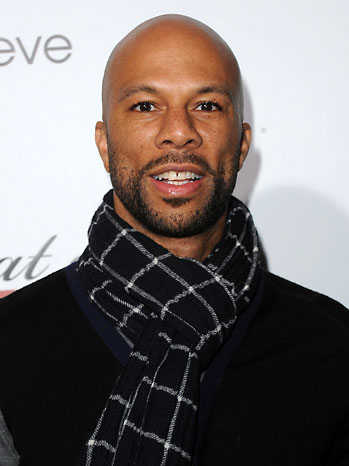
-Angela Jacob
Tuesday, September 29, 2015
Kairos of "Is it because i'm black?"
Kairos is an important rhetorical device used in Syl Johnson's "Is it because i'm black?" This song was clearly made to address racial inequality, as the phrase "It it because i'm black?" serves as the hook of this song. This song was released in 1970, the rhetorical situation being a time of racial tenderness. The United States was still recovering from the civil rights movement at this time, and was trying to adjust to a new society that actively promoted equal rights for all regardless of race. The title of this song communicated to the public in saying that even though blacks were protected by the law, there were still many disadvantages of being a black man during this time. At the time, many of these disadvantages were not clear, making black men wonder whether or not they were, for example, denied something because they were black.
-Nebeyu
-Nebeyu
Stasis Theory of "Is it Because I'm Black?"
In order to apply stasis theory to Syl Johnson's song, it is first necessary to understand some historical context. While the early Civil Rights movement of the1960s succeeded to pass laws which guaranteed equal rights for African Americans under the law, the movement in the late 60s and early 70s moved on to raise the standard of living for the large population of the race living in poverty. Acts such as The Civil Rights Act of 1968 made it illegal to discriminate on housing based on race and court cases such as the Supreme Court case Green V. County School Board of New Kent County made desegregation of schools a priority. All were attempts by the government to improve the socio-economic status of African Americans, many of who were stuck in urban housing with poor education and little opportunity to leave.
As you can see from this graph, the unemployment rate of African Americans in the early 1970s was about twice the average unemployment rate. In his 1970 song "Is it Because I'm Black?", singer Syl Johnson links the high unemployment rate of African Americans to a prejudice held by many white Americans against people with a darker skin tone. Thus, in the context of stasis theory, Johnson would be arguing that the cause of the disparity between black and white people in America is no longer entirely blatant racism, but a subconscious aversion held by most white people to give jobs, let alone high-paying jobs, to African Americans. Johnson's emotional plea reflects his desire to radically change the low socio-economic status of African Americans in the 1970s. His words still ring true today, as there still exists a gap, if not quite as large, between the average unemployment and the unemployment of African Americans.
-Daniel Saliunas
 |
-Daniel Saliunas
Audience: Syl Johnson's "Is it because I'm black"
The intended audience for this song would be anyone who had an active role in the Civil Rights movement: whether it was an opposing role or a supporting role. Syl Johnson's "Is it because I'm black" was released in 1970, which was towards the end of the Civil Rights movement. At this point, the movement was on its way out and had gained tremendous success. As a song, the intent is that people will hear it, listen to it, and react to it. As it extended its reach throughout the public, parents may have prevented their children from listening to it because these parents opposed the message that the song has and wanted to prevent their children from listening to the song, fearing that they might be influenced by Johnson's message. The song lyrics contain many statements followed by the question that gives the song its title: "Is it because I'm black?" These statements are reflections of what occurred leading up to, and during, the civil rights movement. Lines like "Something is holding me back, is it because I'm black" and "Cause I wanna be somebody so bad,...But something is holding me back / Is it because I'm black?" are direct references to the struggle that African Americans had to face during the Civil Rights movement. These references act as pulls to the audience for the African American audience to listen to and to relate with to the message of the song. For the white audience, these lines act to give attention to the struggles that African Americans faced before and during the civil rights movement. While most of the prejudice that spawns from race is gone, it has not totally been eradicated just yet. The contemporary relevance to this song is one that reminds any modern day listener to the the struggles that African Americans had to face before and during the Civil Rights movement.
-Louie
Subscribe to:
Posts (Atom)